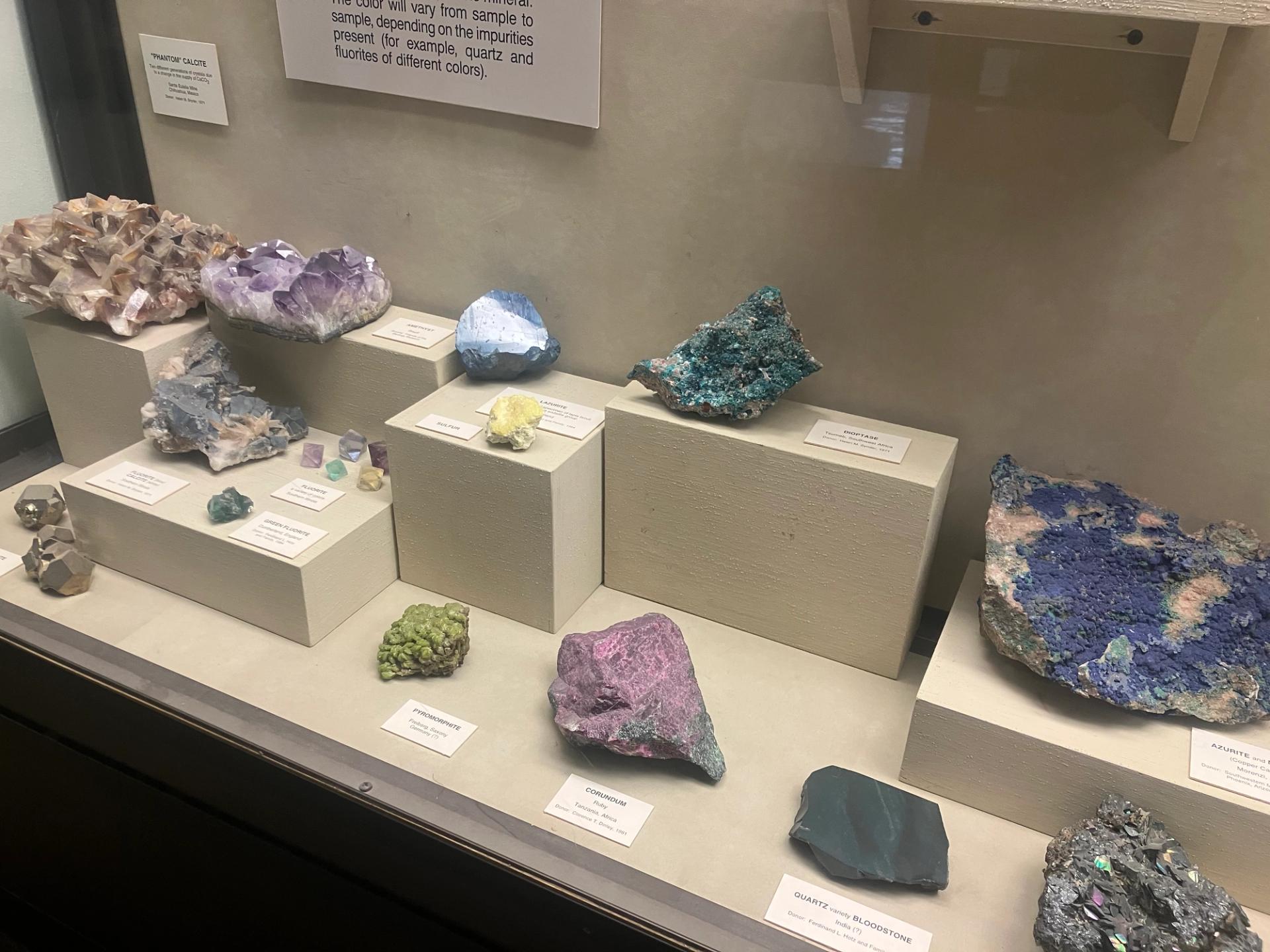
When my kids were younger and I used to volunteer to chaperone school field trips, one of my favorite trips was the UW-Madison Geology Museum on Dayton St. The free museum is just packed with so many treasures for both young and old to explore.
And today on the City Cast Madison podcast, we have a story on one of the museum’s newest – and oldest – treasures.UW paleontologist David Lovelace talks about the museum’s latest discovery, a brand new species of dinosaur that roamed the northern hemisphere a full 10 million years earlier than previously thought possible.
Here are some other cool things to know about the UW Geology Museum:
The Museum’s Origin Story
The museum itself isn’t as prehistoric as some of its exhibits, but it’s still pretty old. It dates back to the first UW Board of Regents meeting in 1848, where the regents talked about displaying mineralogical deposits found around the state.
The museum didn’t officially open on the third floor of Science Hall until 1877, but it really found its footing in the 1920s when its first full-time curator, Gilbert Rassch, was appointed to modernize and expand the museum. Finally, in 1981, the museum moved into its current home in Weeks Hall.
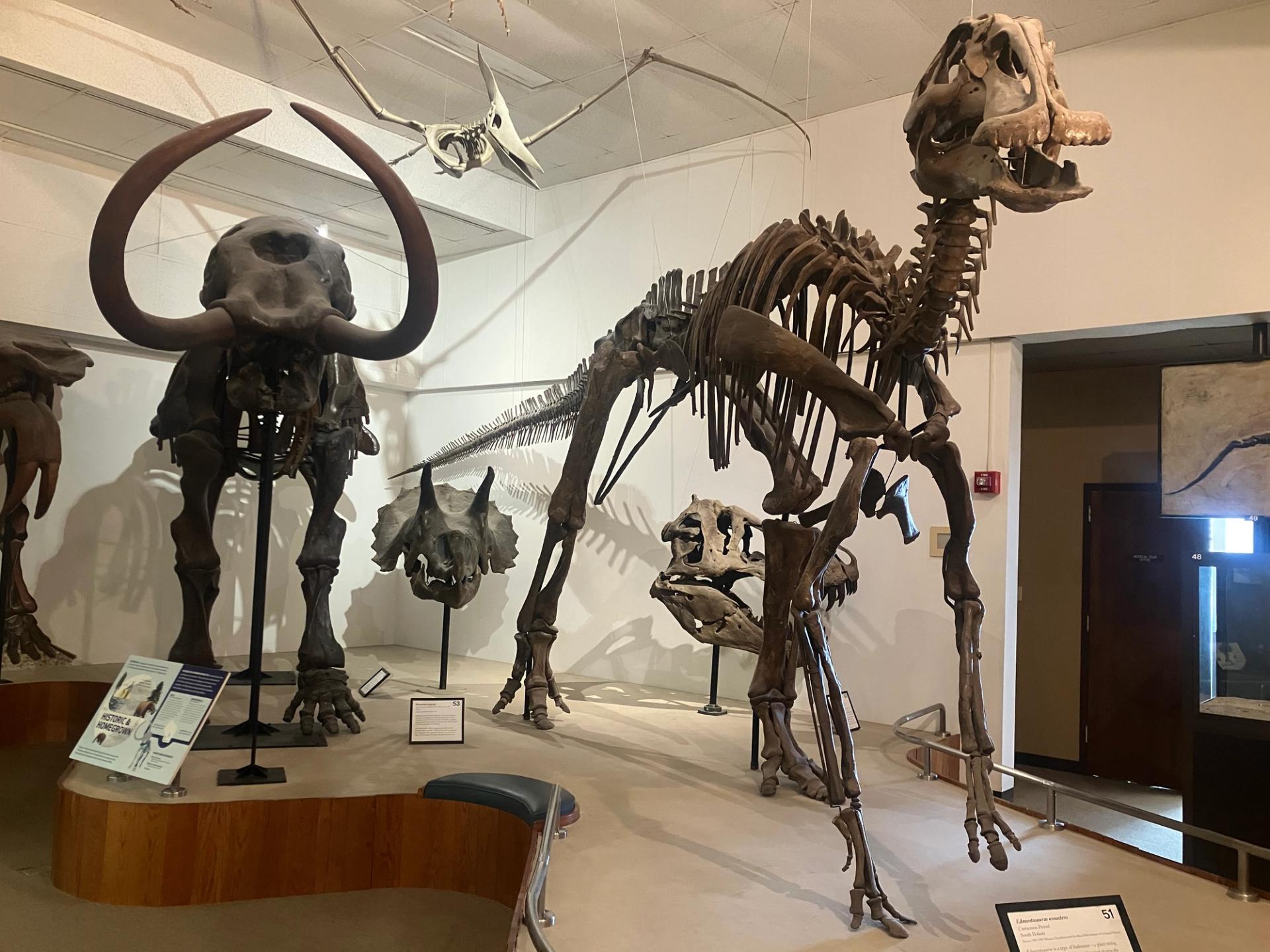
Dinosaur and mastodon skeletons at the UW Geology Museum are a big draw. (Rob Thomas/Madison Minutes)
The Boaz Mastodon
The thing that many visitors (especially little ones) remember best about their first museum visit is the Boaz Mastodon. The 9.5-foot-tall, 15-foot-tall prehistoric skeleton was found in the streambed of a family farm in 1897. It was reconstructed in 1915, and since only half the bones were found, the other of the skeleton was recreated using inverted molds of the existing bones.
It now looms large next to an 1888 replica of an armadillo-like glyptodon and an Edmontosaurus skeleton – the first dinosaur to be displayed in Wisconsin.
The Glow-In-The-Dark Minerals
In addition to a recreation of a Wisconsin cave, the museum includes an exhibit of what looks like fairly ordinary rocks and minerals. Press the big red button on the wall, though, and the alcove is plunged into darkness, and black lights showcase vibrant fluorescent colors coming from those not-so-ordinaryrocks.
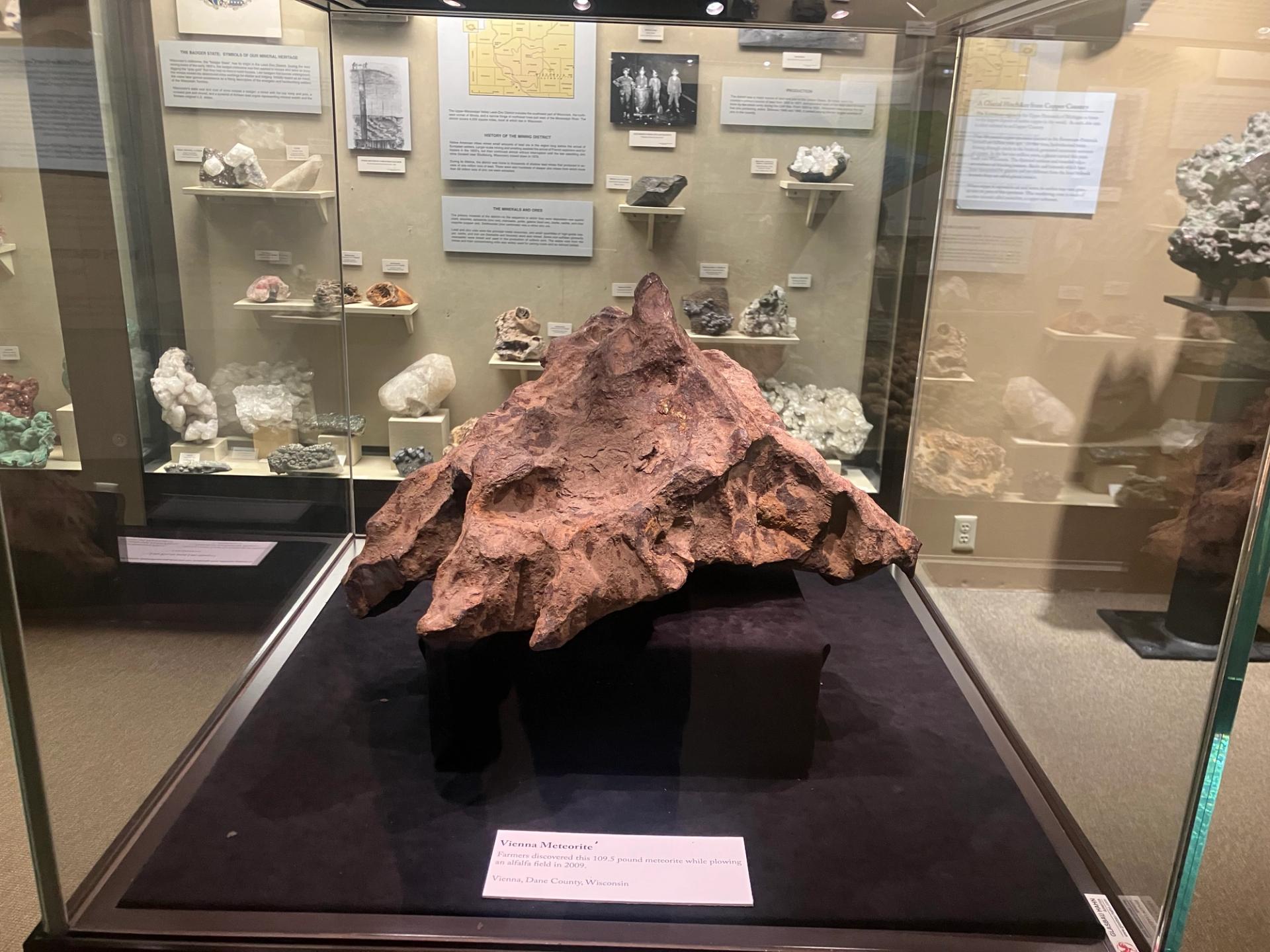
This meteorite was found on a farm in Dane County. (Rob Thomas/Madison Minutes)
Vienna Meteorite
One of the “newest” exhibits in the museum is actually 4.5 billion years old. In 2009, a farmer near Vienna, Wisconsin was picking rocks out of his field when he found an unusually large one. Turns out, it was from space. The Vienna Meteorite weighs 110 pounds, and sat in the family’s garage for years until it was donated to the museum in 2023.