As the Trump administration imposes a fuel blockade on Cuba and officials talk about overthrowing its government as it did in Venezuela, the future of the Cuban people has been especially personal to Madisonians.
For decades, Madison has had direct ties with the city of Camagüey as part of the Madison-Camagüey Sister City Association, with cultural exchange trips to the city and now, Cine Cubano, a new film series taking place monthly at the Cardinal Bar.
The next screening will be March 8 at 1 p.m. and, in honor of International Women’s Day, will be a double feature of movies celebrating Cuban women. “Hasta Cierto Punto (“Up To a Certain Point”) is a 1983 romantic drama, while “Lucia” is a 1968 drama that looks at three women named Lucia at different periods of Cuba’s history.
Tourism in Cuba is prohibited for U.S. citizens by the State Department, but short-term travel for other purposes is allowed. Here’s what you need to know about Camagüey.
🇨🇺 Where Is Camagüey?
Camagüey is the capital city of the province of the same name, Cuba’s largest province, with a population of over 333,000 people. It’s located in the central-eastern region of the country, and is known for its wide, flat savannahs, good for agricultural development. The province stretches to both the north and south coasts, and there are 120 kilometers of beaches – roughly a quarter of the beachfront in the entire country.
⚔️ When Was It Founded?
Camagüey was founded in 1514 as Santa Maria del Puerto del Principe (Puerto Principe), but was moved inland to the Indian village of Camagüey, and moved several times during civil strife in the next century, including being raided by pirates. Legend has it that the city’s maze-like design, with narrow, winding streets and hidden alleys, were designed to thwart the invading buccaneers.
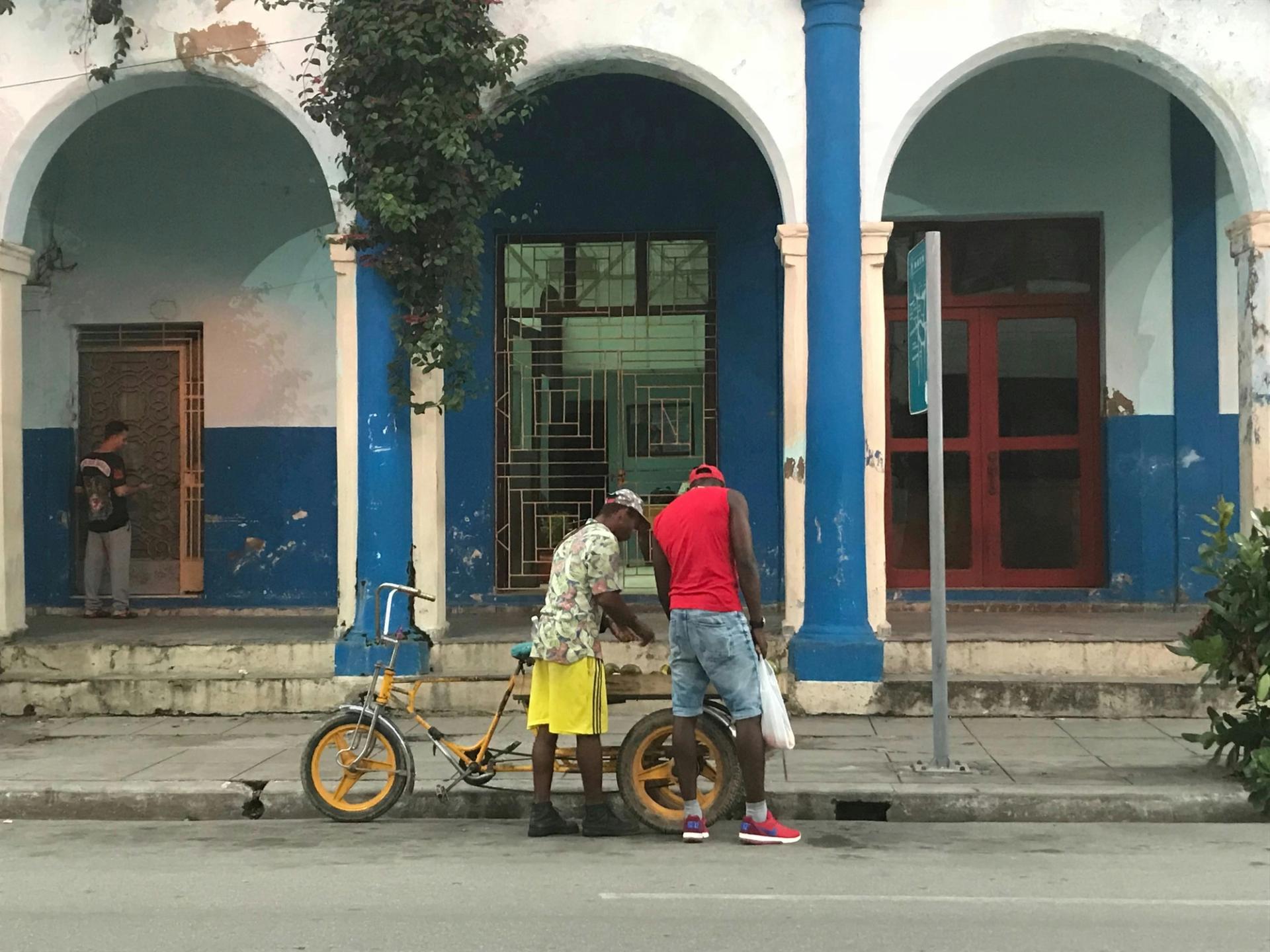
A man shops from a street vendor in Camagüey, Cuba. (Renata Mezo / UnSplash)
⛪ What Should We See?
The city retains many traces of its colonial ancestry in its architecture, and the old city center has been named a UNESCO World Heritage Site.
The city is full of Baroque churches and golden high altars, including Camagüey Cathedral, which was built in the 19th century on the site of a 16th-century chapel. In 1998, the cathedral was completely restored using funds raised from the visit of Pope John Paul II to the city. But the most symbolic church in the city is the Church of Nuestra Señora de la Soledad, built in the 18th century and is renowned for being the church where Cuban revolutionary Ignacio Agramonte was baptized.
Camagüey has been nicknamed the “City of Clay Pots,” and clay pots are everywhere in the city to catch rainwater. Another local legend has it that if you drink water from one of the pots, you will never want to leave the city.
For film fans, Cinema Street has five different restored movie theaters and movie-themed cafes and businesses. Another big attraction is the local ballet, the Teatro Principal, which brings the entire town together in their finest clothes on the weekends.
🍽️ What Should We Eat?
Restaurants in Camagüey highlight the favorite cuisine of the region, including matajibaro, which is mashed green plantains mixed with pork cracklings, cassava bread, Cuban broth and milk candies for dessert.
Food is usually pretty affordable. A recent travel guide recommended El Carmen for high-end food like pork medallions, and El Solar for the cheapest, most delicious lobster you’ll find in the entire country. Street vendors sell churros and soft-serve ice cream for dessert.