Picture this: It’s springtime 1969. Richard Nixon is president and the Vietnam War is at its peak. Anti-war protests at universities across the nation have heightened the tension between students and law enforcement and UW-Madison is no exception.
While tales have been told that the original Mifflin Street Block Party was born out of such a protest, that’s not the whole story. On May 3, 1969, students and members of the Mifflin Street Community Co-op just wanted to let loose, smoke weed, and dance in the street. The party-goers were met with resistance from police that led to a multi-night standoff and devolved into an all out riot.
Dozens of people were injured and arrested, including the 20-something alderman who represented the Mifflin Street area at the time, future Madison mayor Paul Soglin.
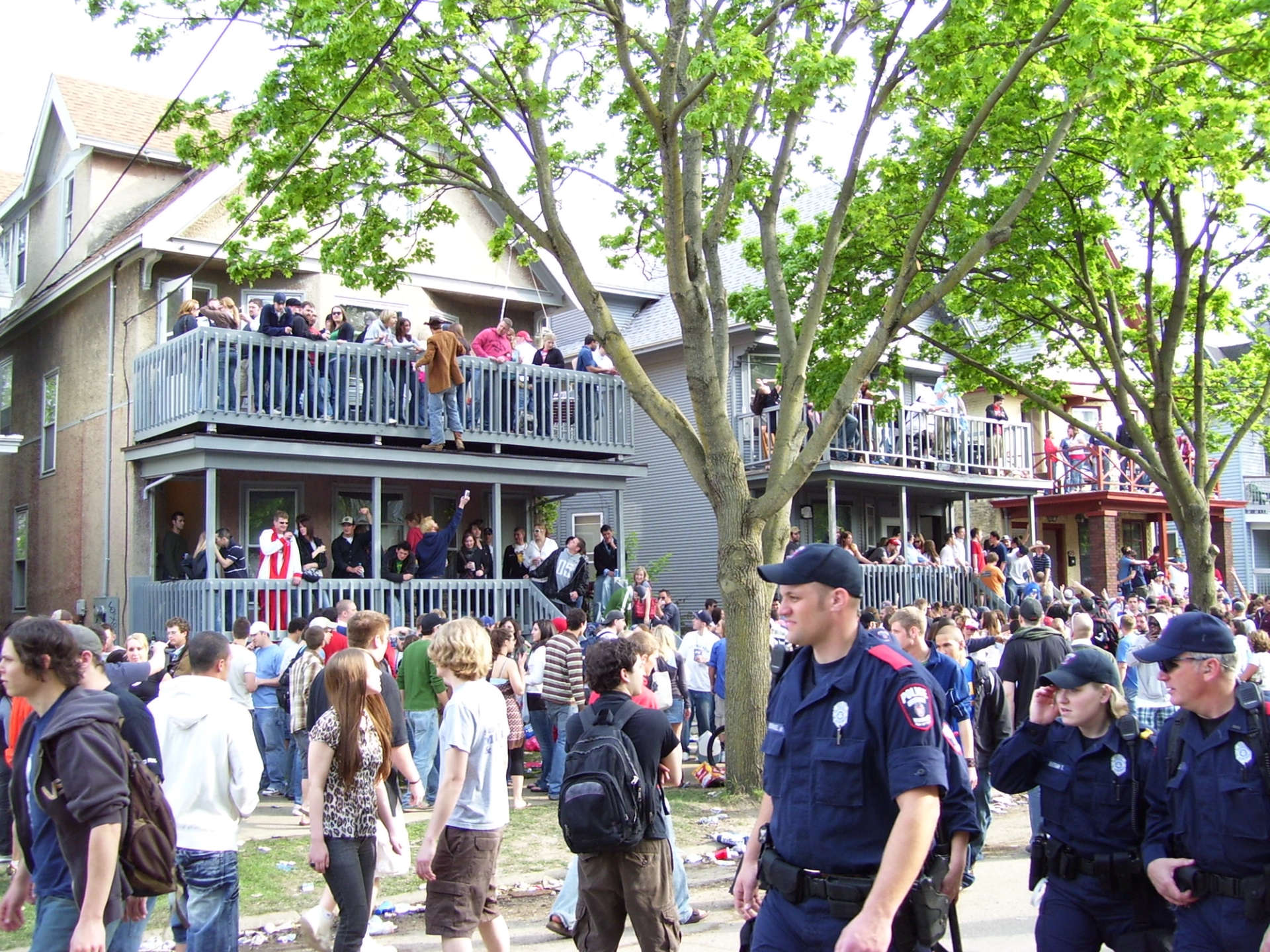
The Mifflin Street Block Party continued annually for the duration of the war and beyond. As the years progressed, the counter-culture themes of the event faded away and the debaucherous rancor of it all continued to elevate.
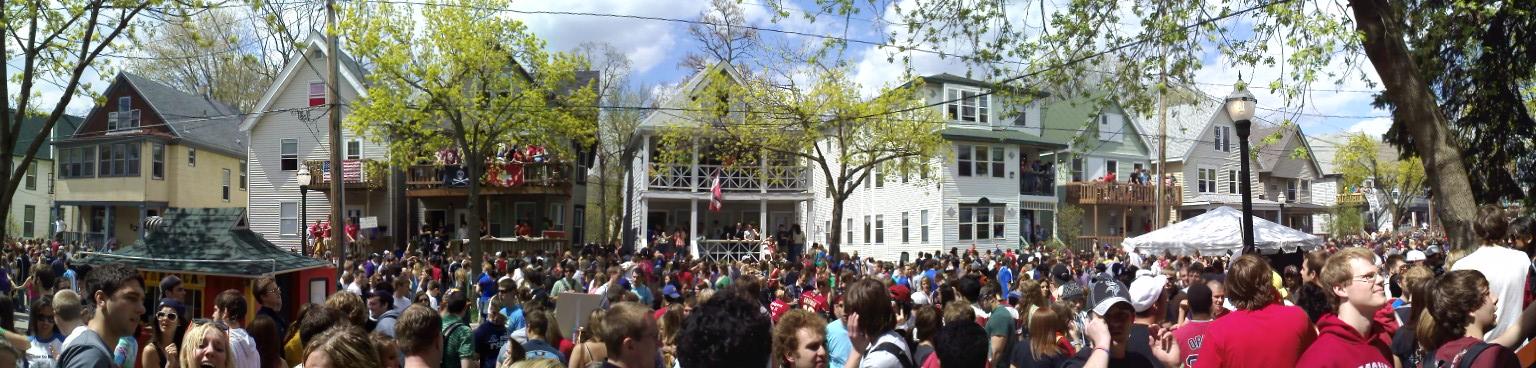
At its peak, Mifflin drew crowds of nearly 20,000 people. (Nickclarson / Wikimedia Commons)
Mifflin drew crowds of more than 10,000 people each year. In an attempt to better control the event, the city allowed sponsors for the party, bringing food vendors and live music. By 2009, attendance grew to 15,000 and arrests had dropped from previous years.
But stabbings, riots, sexual assaults and other bad behavior ultimately led to the city disavowing the event. By the 2010s, the city and university actively tried to cancel the party.
“That’s my goal precisely, to keep downsizing it every year to get to the point where there will be no block party,” Soglin said in 2012. (The irony!)
That same year, former UW Dean of Students Lori Berquam released a video urging students not to attend Mifflin. The video went viral after it was remixed with club music.
In 2013, the university tried to actively dissuade students from attending Mifflin by hosting the Revelry music festival. The festival brought a few big names to town like Chance the Rapper, G-Eazy, and the Chainsmokers but nevertheless, Mifflin persisted. Revelry, facing a lack of funds and declining interest, got the ax in 2017.
The Mifflin Street Block Party continued annually, though to a lesser extent, drawing smaller crowds. In 2020 for the first time in 50 years, the streets of Mifflin went quiet on the would-have-been party weekend because of COVID-19 restrictions on group gatherings.
The party returned the following year and continues to live on, though these days with much less protest and more alcohol.