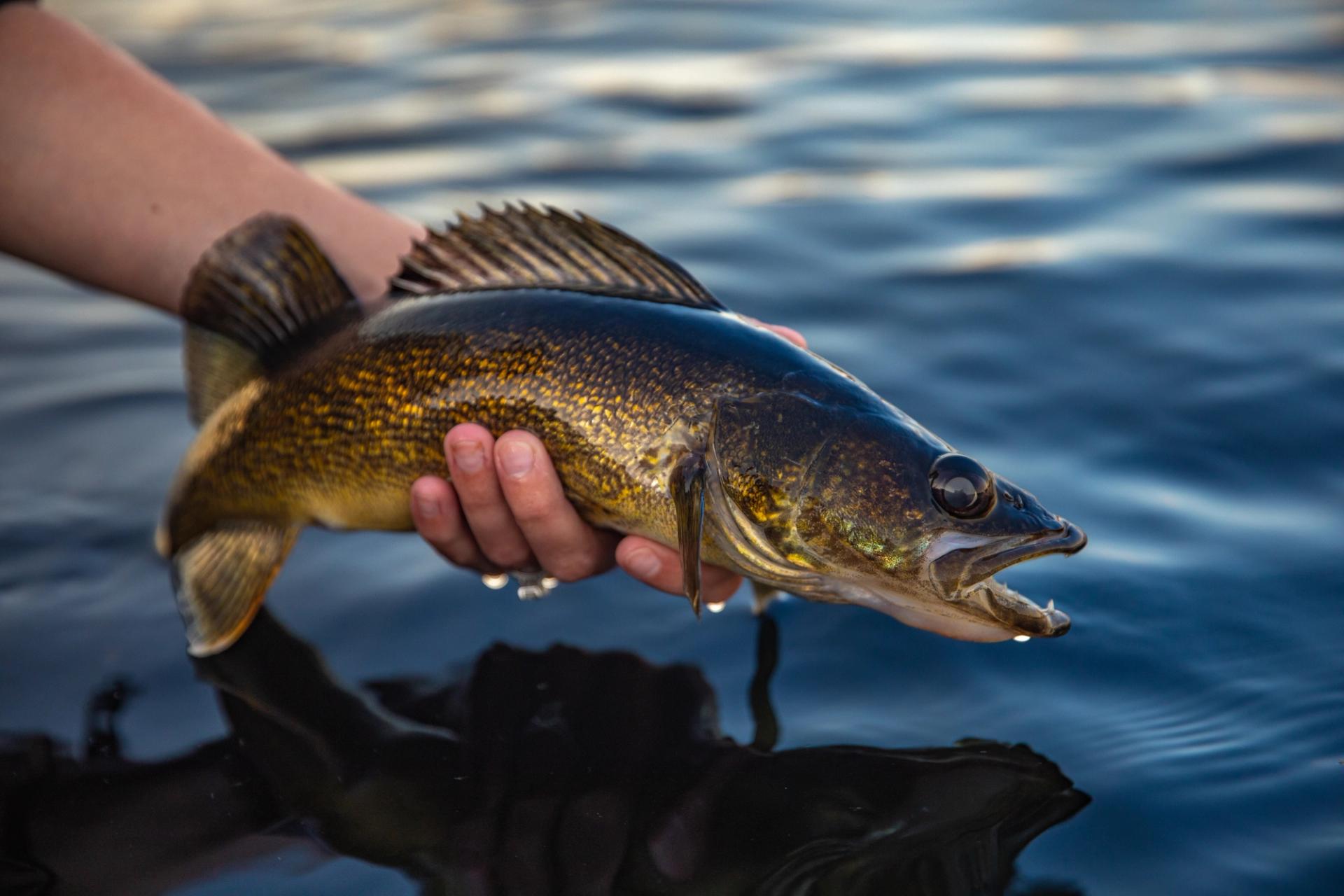
Wisconsin’s unseasonably warm spring may have been a welcome event for those of us who don’t love the snow, but our warming climate is also stressing out the state’s prized game fish — walleye.
A recent study out of UW-Madison found that early ice melting on the state’s lakes hurts the survival rate for walleye babies. This is because when it comes to the circle of life, timing is everything.
In a normal year, ice melts, eggs are laid and hatched, and walleye babies feed of the abundance of zooplankton that show up to feed on the phytoplankton that forms from the ice melt, Martha Barta, the lead author on the study, explained on recent episode of City Cast Madison.
But as temperatures warm and ice melts earlier in the season, walleye haven’t adapted to the change, leading to a mismatch in the cycle. This means that now when their eggs hatch, baby walleye are left without much food and survival rates can be really low, Barta said.
But as walleye populations decrease, the Wisconsin Department of Natural Resources is taking proactive steps to help the species.
The DNR has started to put baby walleye in lakes across the state so that the walleye populations can sustain themselves. Biologists are also using a technique called electrofishing. Through this process, scientists shock an area of a lake, the fish float to the top, and scientists collect eggs from females to raise in hatcheries so they can have a better chance of survival. Those fish are then released into area lakes.