When ice is too difficult to remove from sidewalks and driveways, residents can use salt, sand, and other melting agents to prevent the ice from becoming dangerous.
Before you even think about grabbing the salt, be sure the area is shoveled as much as possible. Shoveling earlier, rather than later, will also mean less ice to break up. The more snow you remove manually, the less salt you’ll need and the more effective it will be. And when it comes to salt, moderation is key. A coffee mug of salt is enough to treat a 20-foot driveway or 10 sidewalk squares.
It’s important to be aware of your salt use because any salt on Madison’s roadways ultimately spreads into our lakes, waterways, groundwater, and soil, and it’s difficult to remove.
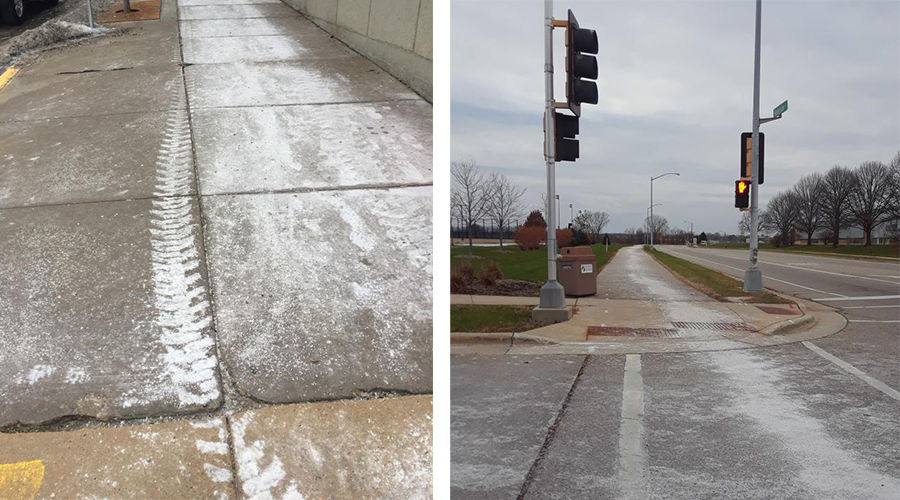
A 2022 city ordinance requires residents to remove any excess salt following ice or snow melting. These materials also should not “unreasonably accumulate,” according to the ordinance. Meaning, your sidewalk shouldn’t look like this. Failure to follow the rules can result in fines ($124 for a first offense and $187 for subsequent violations). Hot tip: dry salt can be reused.
It’s also important to note that rock salt doesn’t work when the temperature drops below 15 degrees, according to Wisconsin Salt Wise. Some salts will work in lower temperatures but it’s important to check the packaging for best results.
Sand Works, Too
Aside from salt and other chemical melting agents, sand (and cat litter) can be used to help break up ice patches and build traction on slippery roads and sidewalks. It won’t melt the ice, but it will build traction.
And luckily for Madisonians, the city provides free sand for residents to use (but be sure to bring your own shovel and pail!). Sand piles can be found at these locations throughout the city and barrels of sand can be found around the city at heavily-used crosswalks.
Bottom line: When it comes to salt, less is more. And don’t forget, there’s free sand right around the corner.
Madison Minutes writer Abby Becker contributed to this article.