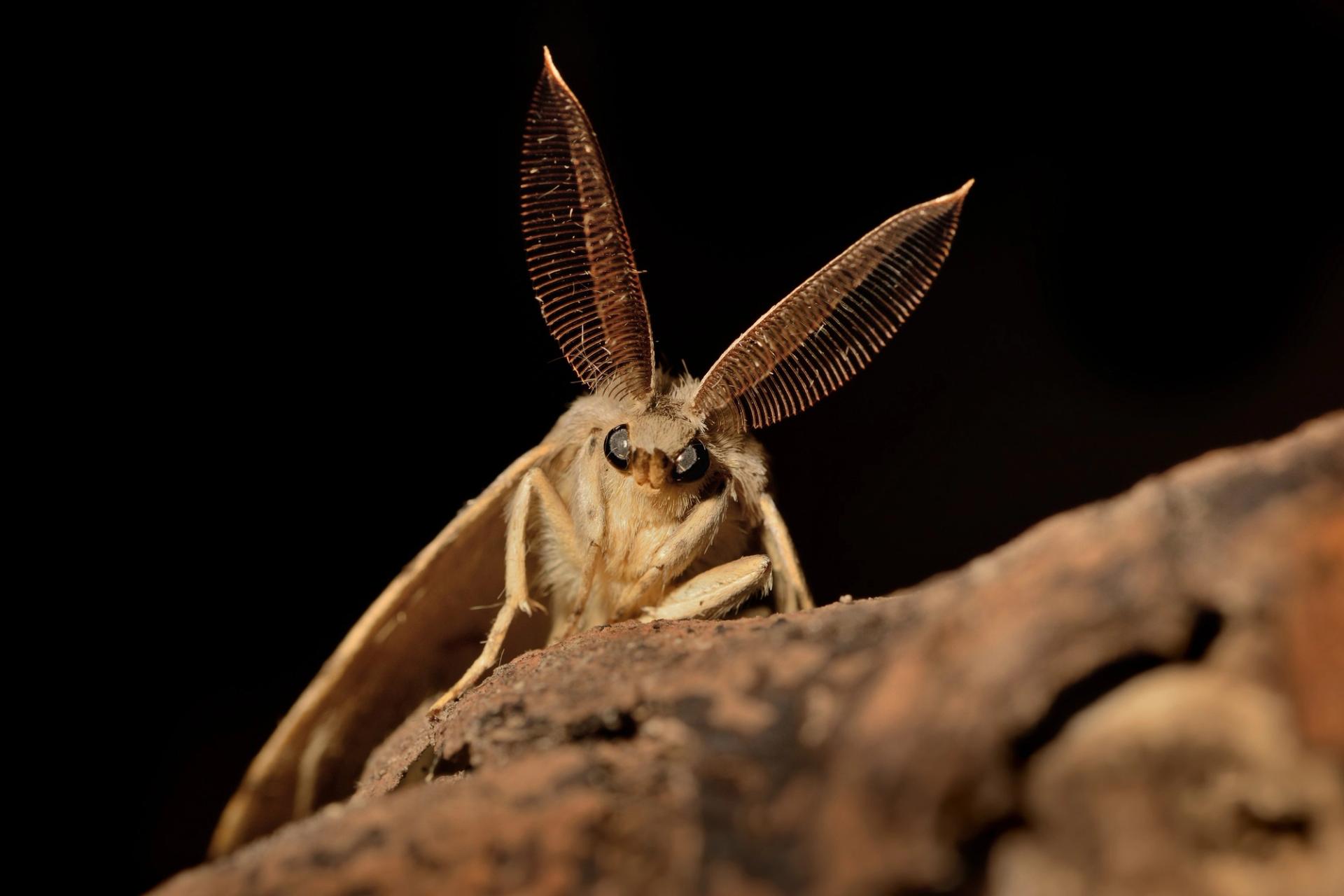
The Wisconsin Department of Natural Resources is warning homeowners to be on the lookout for signs of spongy moths in their yards and trees.
Though the creatures may sound cute, spongy moths (formerly known as gypsy moths) are an invasive species that can have devastating effects on our local ecosystem.
According to the WDNR, the insect was first (accidentally) introduced to the U.S. in 1869 by an amateur entomologist. As caterpillars, the insects are ferociously hungry and feed on hundreds of species of trees and shrubs during spring and early summer.
Spongy moths have defoliated millions of acres of trees in at least 20 states. Last year alone, the insect was responsible for 373,000 acres of defoliation in Wisconsin — a new state record.
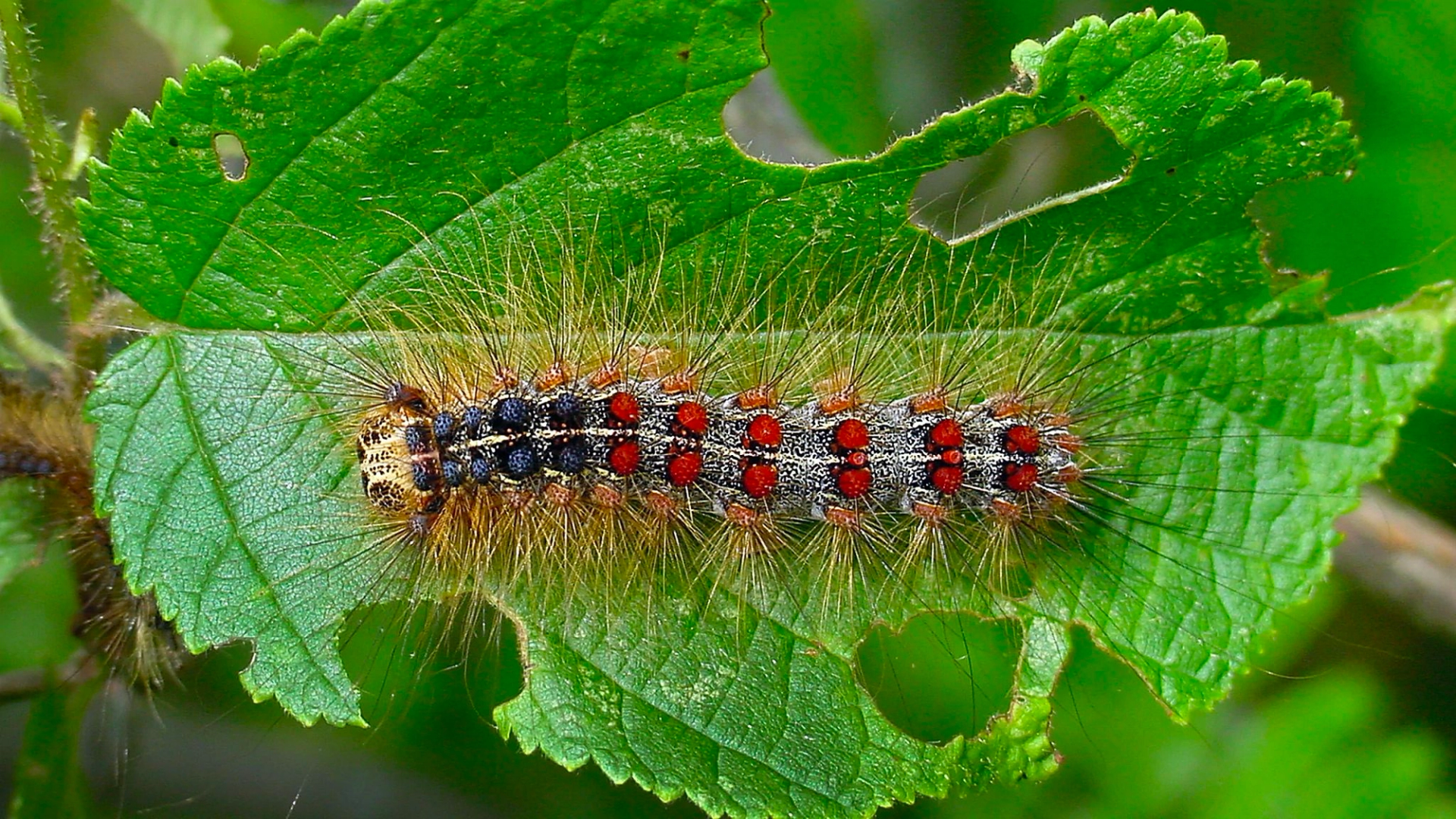
Spongy moth caterpillars feed on more than 300 species of trees and shrubs. (WDNR)
Spotting Spongies
Spongy moths are found in nearly every part of the state. Though the caterpillars feed on more than 300 species of trees, they tend to prefer oak, birch, crabapple, aspen, willow, and linden (basswood) trees.
When looking for the insect, search for their egg masses, which look like tan lumps roughly the size of a nickel or quarter. Masses can typically be found on trees, shrubs, and other outdoor objects. (They might even be hiding in birdhouses!)
In southern Wisconsin, egg masses start to hatch in mid-to-late April, according to the WDNR.
What To Do About Spongy Moths
If you find an egg cluster, you can stop it from hatching and dispose of it in several ways. Applying an approved horticultural oil can stop egg masses from hatching when applied properly. If that’s not an option, egg masses can simply be removed from trees and left to soak in soapy water for several days before disposal.
When it comes to the caterpillars, barrier bands can prevent the insects from moving up trees to the leaves. The UW Division of Extension has a helpful guide for making a sticky barrier band that won’t harm your trees.
Insecticide treatments can also be effective against the caterpillars when they’re small.