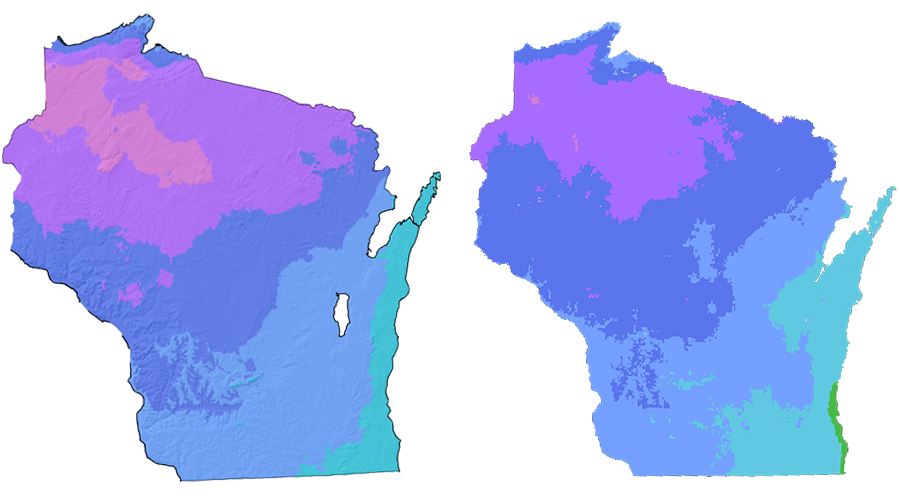
For the first time in more than a decade, the U.S. Department of Agriculture updated its Plant Hardiness Zone Map. But local farmers and gardeners have been feeling the changes for a while.
Put simply, the USDA’s map helps growers determine what plants are best suited to thrive at a certain location. The 2023 map represents 30-year averages of the lowest annual winter temperatures of a given area.
Previously, Madison and much of Dane County sat in the -20 to -15 degrees Fahrenheit zone. Now, the city is in a warmer zone with average extremes between -15 and -10 degrees Fahrenheit. Madison isn’t alone in this shift, roughly half the country shifted a half-zone warmer on the 2023 map. While this change might not sound like a lot, bitter cold temperatures help ward off invasive species and are critical to the growing process.
The change in Madison’s categorization on the Hardiness Zone Map shouldn’t have a major impact on local growers, since many have been adapting to the slower changes over the decade already and noticing a wider variety of plants surviving our winters. For example, some growers have been planting garlic later in the fall because of higher soil temperatures; and some have found spring a more challenging time to grow peas and lettuce because of rising seasonal temperatures, according to the Wisconsin State Journal.
Horticultural experts have said the changes are indicative of larger warming trends brought on largely by climate change, which can lead to the loss of native species. But at the same time, experts caution against using this map as a means of tracking climate change because it only accounts for extreme low temperatures.