


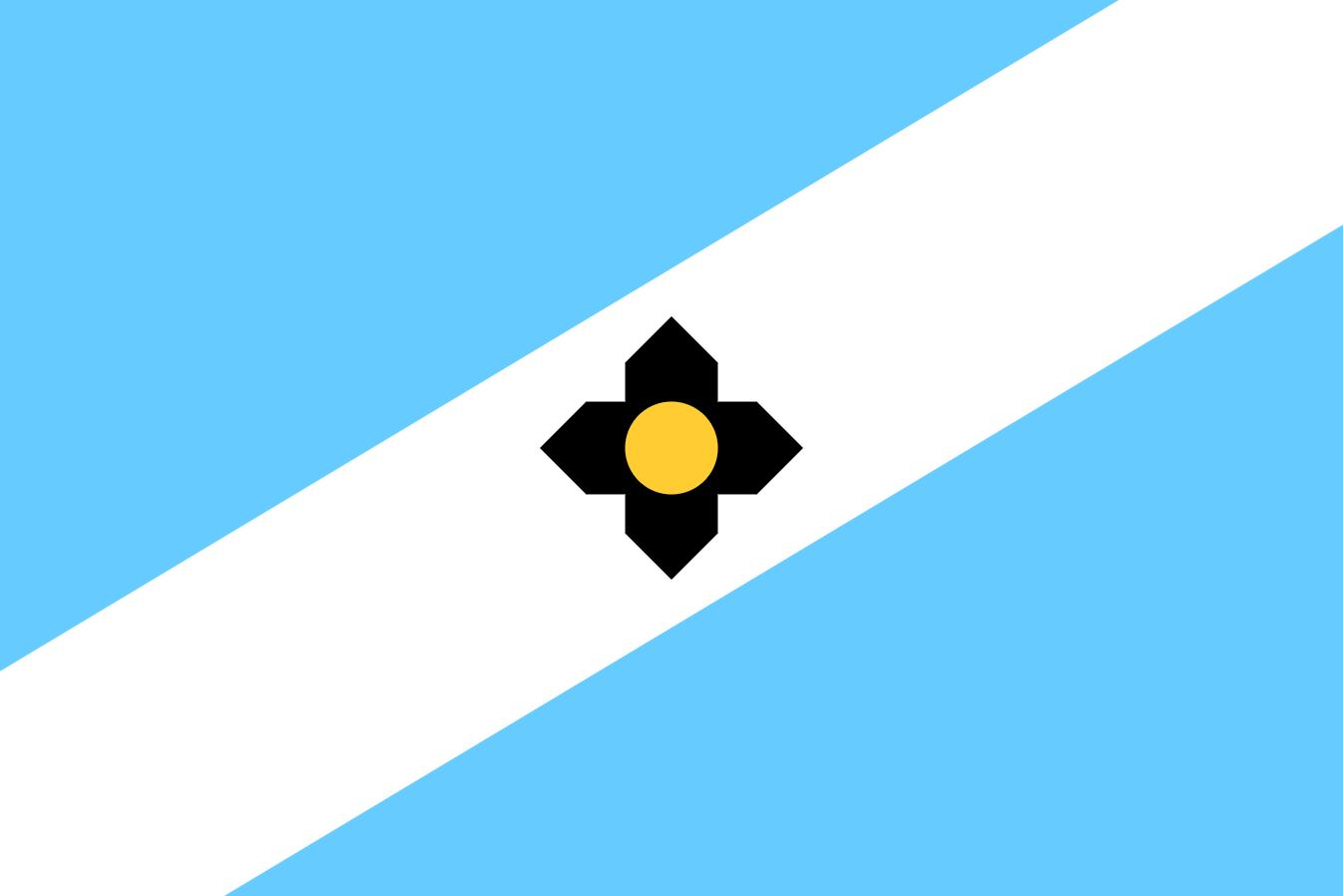
Madison first adopted an official city flag in the early 1960s, and until recently, it existed in obscurity and was rarely flown. The flag’s use experienced a resurgence in 2015 after a resolution was passed requiring the flag be flown on city property to serve as a symbol of local pride. But that initial flag has some key differences with the flag you’ll see all around town today.
In its original design, the white and blue stripes featured a center design of a cross with a Zia sun, a symbol that is sacred to the Zia Pueblo within New Mexico. This solar symbol features a red circle at the center of a cross where each line has four lines extending from it, which to the Zia people represents the circle of life. The symbol is also on the New Mexico state flag, and the Zia people have long fought for control of their sacred emblem. Many Madisonians and Wisconsinites debated whether this former flag represented their city, the relevance of using a symbol representing an Indigenous group that lives outside of Wisconsin, and if using this symbol was offensive.
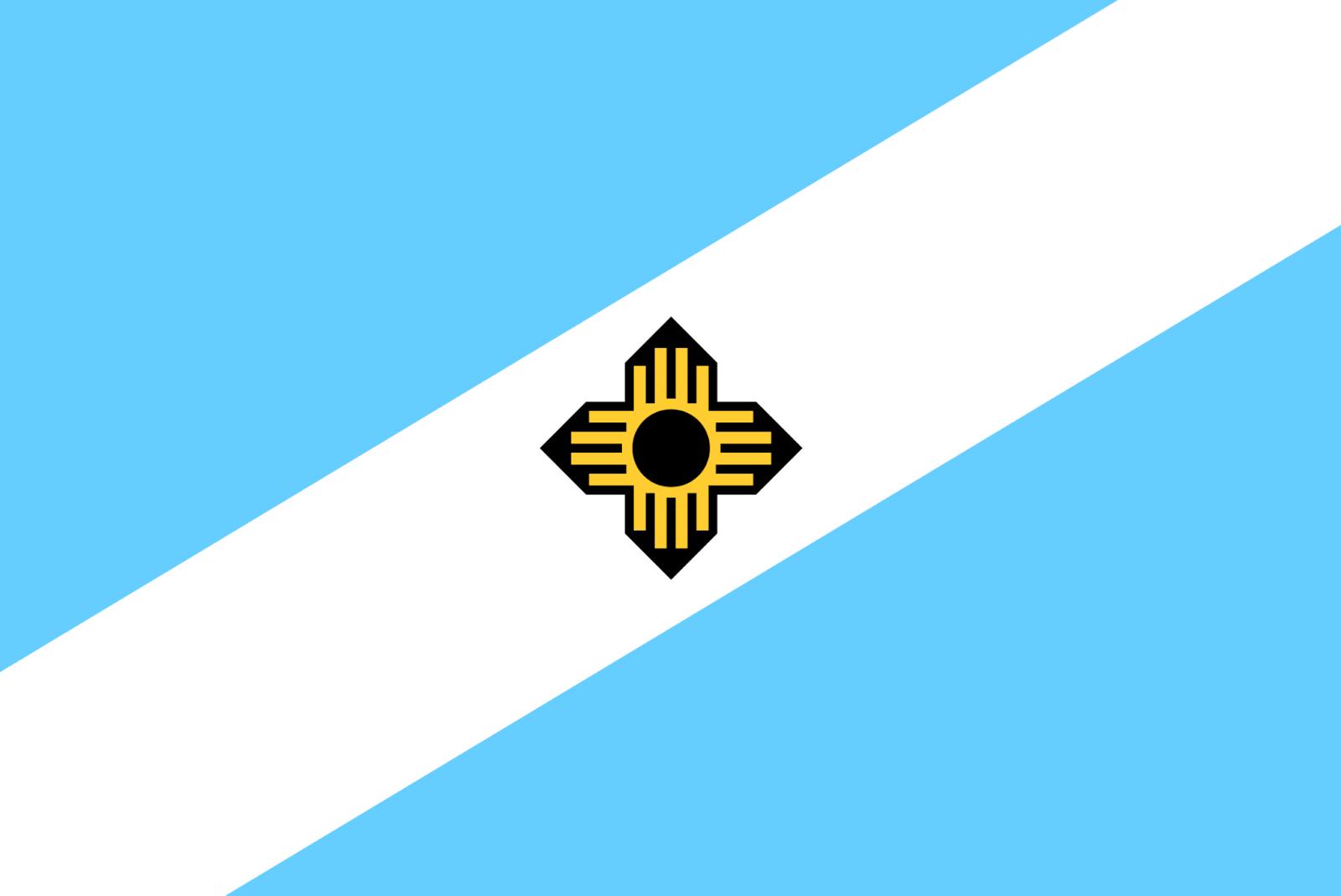
Madison’s original flag was used from 1962 to 2018. (Alan De Smet, English Wikipedia / Wikimedia Commons)
Fast forward to today, and Madison’s got a new flag! The white and blue stripes representing Lake Mendota and Lake Monona remain, and the Zia sun symbol has been replaced with a black and yellow cross representing the state capitol at the center of the Isthmus, with the four legs representing city lakes: Mendota, Monona, Waubesa, and Wingra.
Madisonians have a lot to be proud of with this new flag: It was voted one of the best city flags in the nation, according to the North American Vexillological Association. They gave Madison an A+ rating 🤓
So why is Madison’s flag so great? (And why the state flag is so not 😬) To find out, City Cast Madison spoke with Ted Kaye, the nation’s foremost authority on flag design.




.svg)