An unusually early heat wave shattered temperature records across the country in June, earning the name “the heat dome.” As if this wasn’t bad enough, us city dwellers have it worse due to something called the urban heat island effect, which causes urban areas to be 1 – 10°F higher than their surroundings.
What Causes the Heat Island Effect?
Firstly, buildings, roads, and cars all absorb and re-emit the sun’s heat far more than natural landscapes. Trees, water, and vegetation naturally cool the air by providing shade and evaporating surface water.
Additionally, vehicles, air-conditioning, and industrial facilities all emit heat in cities, contributing to the heat island effect. Lastly, the structure of the city itself matters. Cities with narrow streets and tall buildings become urban canyons, blocking natural airflow that would otherwise cool it down.
Heat Island Impacts
Besides the discomfort of living in a constant state of sweat (or is that just me?), heat islands also harm the environment. Higher temperatures mean more air-conditioning, higher energy consumption, and more greenhouse gas emissions. The heat is also a serious threat to unhoused people and disproportionately affects low-income populations.
How To Avoid the Heat
- Avoid Madison’s hottest neighborhoods: Madison’s hottest neighborhoods include the areas between Monona Bay and the Capitol Building. Much of that covers the Capitol Neighborhoods, which makes sense considering it’s a more densely populated area with little shade.
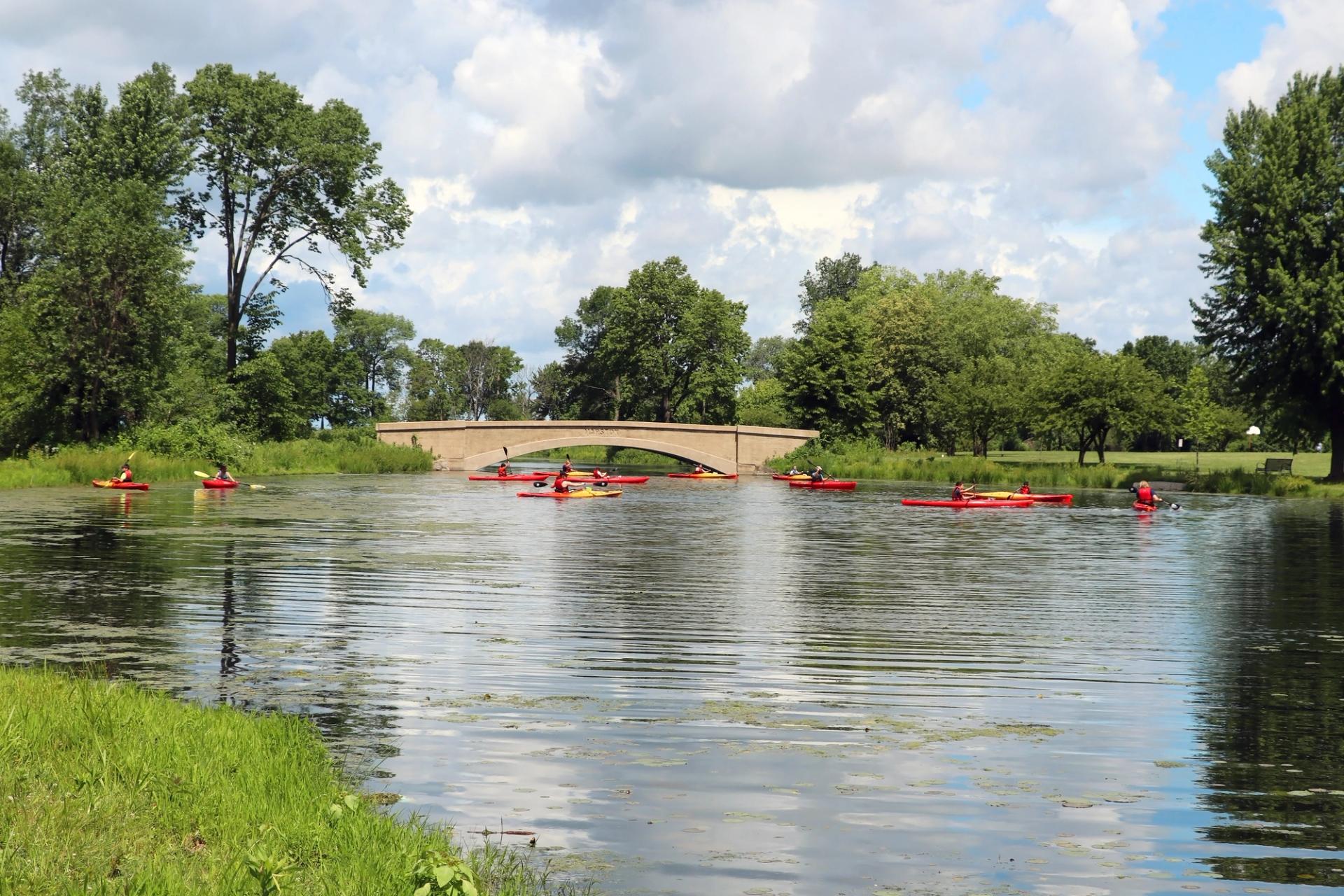
- Head to the park: Dense tree coverage and grass mean temperatures will be up to 10 degrees cooler than in the city. The UW Arboretum and Hoyt Park are all great for this. There had never been a better time for a park picnic party.
- For more ways to stay cool, check out this article with different, fun ways to beat the heat!
Long-Term Cooling Strategies
The best way to mitigate the heat island effect is to increase plant and vegetation cover. Roadside trees, green roofs, and parks are all examples of how cities can do this more effectively. Tech such as cool roofs and cool pavement that reflect more sunlight can also help.