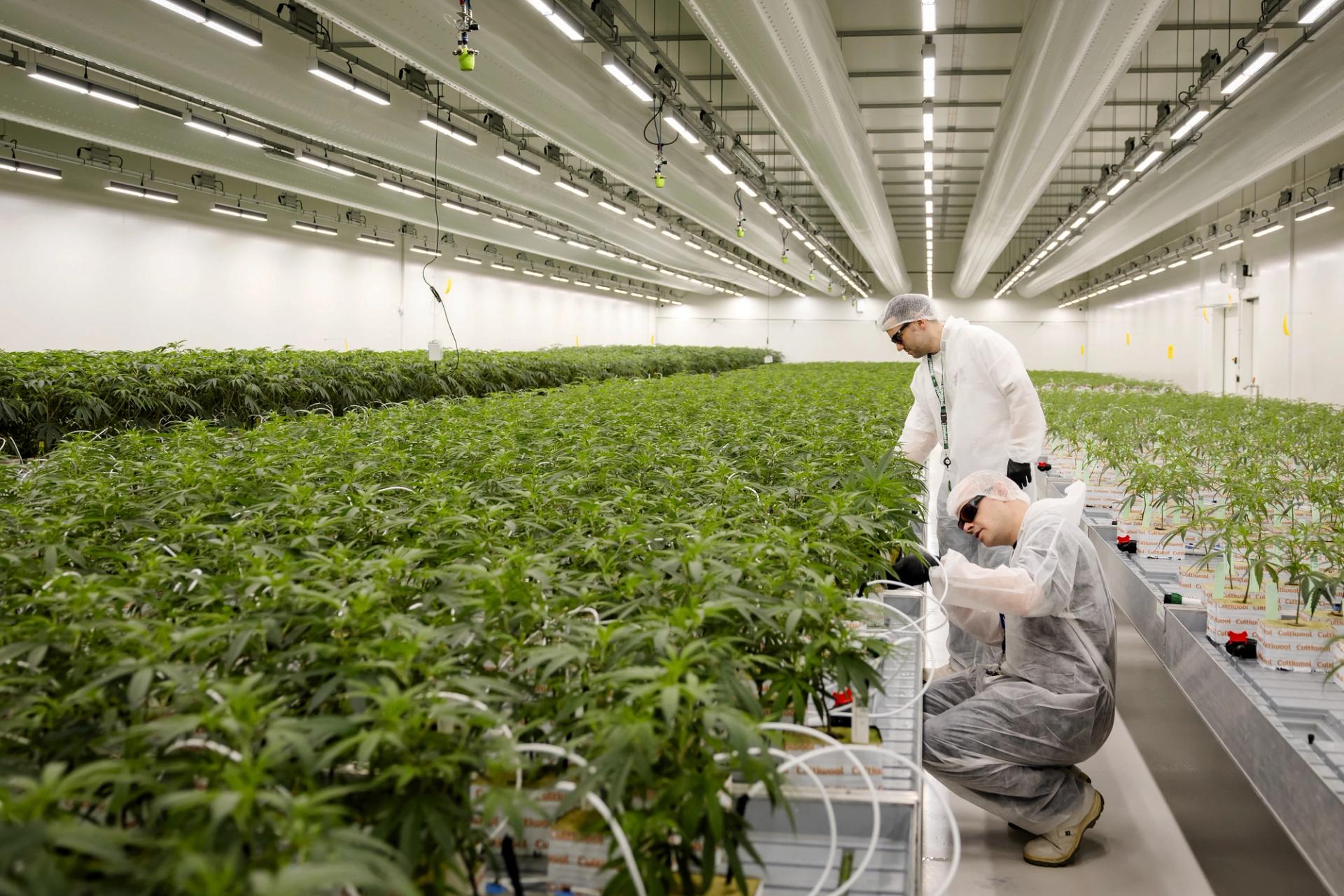
Many high-profile Madisonians have long fought for the full legalization of cannabis, but when it comes to passing legislation in the statehouse, little progress has been made. Gov. Tony Evers said in January that he would ask lawmakers to let voters decide whether it should be legal through binding legislative proposals on the ballot.
But that hasn’t stopped countless cannabis-related businesses from sprouting up across the isthmus in the last decade. On the City Cast Madison podcast today, host Bianca Martin talks to Phillip Scott, owner of Crone Apothecary and Wisconsin Hemp Farmers and Manufacturers, about what is and isn’t legal in the state.
Weed’s Legal Standings
Let’s clear some items up quickly with a look at the rules.
Federally, marijuana is classified as a Schedule One substance, which the law defines as having no accepted medical use and a high potential for abuse (though there has been an effort to lower this classification to Schedule Three).
At the state level, cannabis is also classified as a Schedule I hallucinogenic substance under the Wisconsin Uniform Controlled Substances Act.
In Madison, possession of cannabis is still illegal, but police will not pursue charges unless given a reason. Madisonians who are over the age of 18 are allowed to possess no more than 28 grams of cannabis. Additionally, there are rules for when and where you can light up, for example, you can’t smoke anywhere that all smoking is prohibited (like bars and restaurants) or in a moving vehicle.
CBD, Delta-8, and Beyond
In 2017, then-Gov. Scott Walker signed legislation paving the way for hemp farming in Wisconsin, a practice that was halted with the Marihuana Tax Act of 1938. Once farmers were able to start growing hemp, this opened the door to CBD cultivation and distribution.
Cannabidiol, commonly referred to as CBD, is an active ingredient in cannabis derived from the hemp plant. CBD itself is not psychoactive but the plants grown for CBD also contain psychoactive molecules as Alan Robinson, cannabis activist and co-founder of Herbal Aspects explained on City Cast Madison.
CBD can be synthesized into delta-8 and delta-9 THC (and beyond!), thus opening a door to legal cannabis products. It’s important to note, however, that in order to remain legal, the delta-9 THC content of the product must be less than 0.3%.
Delta-8 THC is about 60% less psychoactive than delta-9, according to Robinson. But chemically the two are very similar, which makes it a great option for older users who might not want to experience an intense high but are still looking for that euphoric feeling. Robinson compares delta-8 to the 1970s style of cannabis, which offered a much milder experience.
There’s also THCA, a type of chemical called a cannabinoid in the cannabis plant. It’s popular in states like Wisconsin where the sale of THC is illegal, because if THCA is heated it will change into THC or delta-9 THC.
What To Look For When Shopping
Though delta-8 and delta-9 are not synthetic themselves, they are synthesized. This means that the CBD must go through a chemical process in order to create the compounds and some retailers take more care in establishing the authenticity of their products than others.
When shopping for CBD, delta-8, and delta-9 products, both Robinson and Scott recommend always asking for the shop’s certificate of authenticity, or COA. This document can tell shoppers if their products have been tested for specific cannabinoids, pesticides, and more.
A reputable establishment should have no trouble producing this document, the corner gas station selling vapes and gummies might be a different story.
Madison Minutes newsletter editor Rob Thomas contributed to this article.